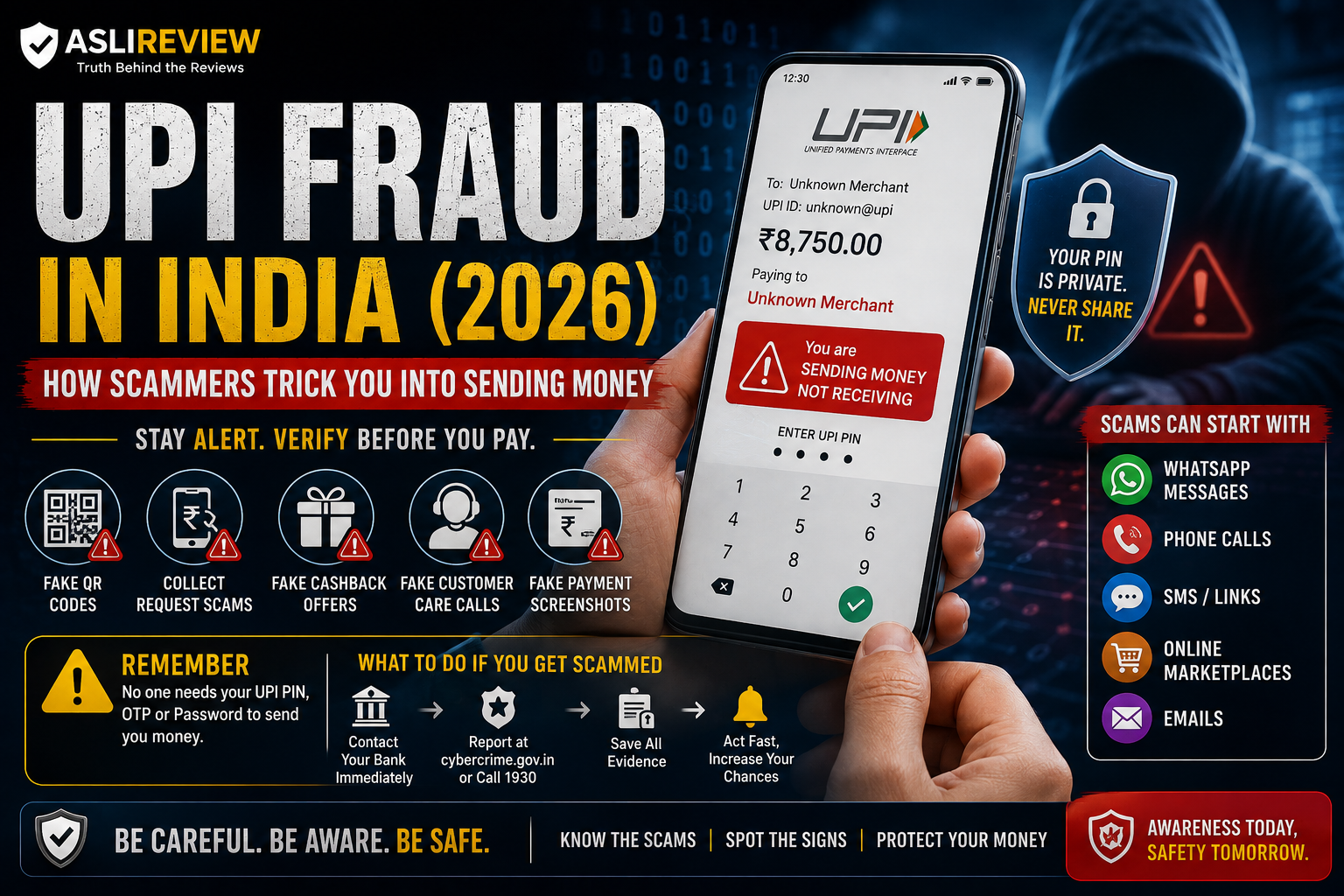
Part 5: UPI Fraud in India (2026): Types, Warning Signs & Safety Tips
By AsliReview Team · 9 August 2026
UPI has changed the way people in India pay for everyday things.
You can use it to pay a shopkeeper, split a restaurant bill, pay a utility bill, purchase something online or send money to family within seconds.
That convenience is exactly what fraudsters are trying to exploit.
The important thing to understand is that UPI itself is not the scam. UPI is a regulated instant payment system operated by NPCI, and it has security and authentication mechanisms built into the payment process. The problem is that criminals use deception and social engineering to convince users to authorize transactions themselves.
This means you don't necessarily need to be "hacked" to lose money.
Sometimes, the scammer simply needs to convince you to press Pay.
🚨 Fraud Snapshot
Category
Digital Payment Fraud
Risk Level
🔴 High
Common Targets
UPI users, online buyers and sellers, senior citizens, small businesses
Common Channels
Phone calls, WhatsApp, SMS, social media, fake websites
QR codes, collect requests, fake payment screenshots, cashback offers, impersonation
Difficulty to Identify
Medium
Financial Risk
Can range from small transactions to substantial losses
Best Protection
Verify every payment request before authorizing it
What Is UPI Fraud?
UPI fraud is a scam in which criminals use deception, impersonation or manipulation to get a person to authorize an unauthorized payment or disclose sensitive payment information.
The scam may begin with something completely ordinary:
Someone wants to buy your product
Someone claims to be from your bank
You receive a cashback offer
You are told that your refund is waiting
Someone says your KYC needs to be updated
You receive a payment request
A caller claims your account has a problem
The story changes, but the objective is usually the same: get you to reveal something sensitive or authorize a transaction.
NPCI specifically warns users about social-engineering frauds involving fake cashback links, QR codes, unknown apps and other deceptive tactics.
How Does UPI Fraud Work?
Most UPI scams follow a surprisingly simple pattern.
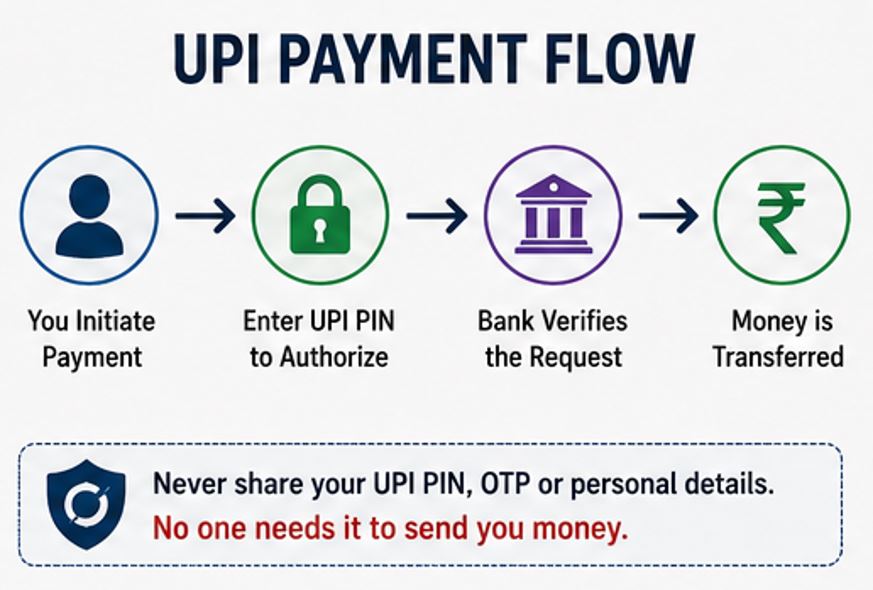
Aslireview_UPI_Payment_Flow
Step 1: The scammer creates a believable story
The fraudster may pretend to be a customer, a bank employee, customer support, a delivery agent, a government official, a company representative, or a friend or relative.
Step 2: The scammer creates urgency
You may hear "you need to complete this now," "your account will be blocked," or "the payment will expire." The goal is to stop you from thinking carefully.
Step 3: You are given an instruction
You may be asked to scan a QR code, approve a collect request, click a payment link, enter your UPI PIN, install an application, share an OTP, or transfer money.
Step 4: The transaction is authorized
If you approve the payment, the money may leave your account almost immediately.
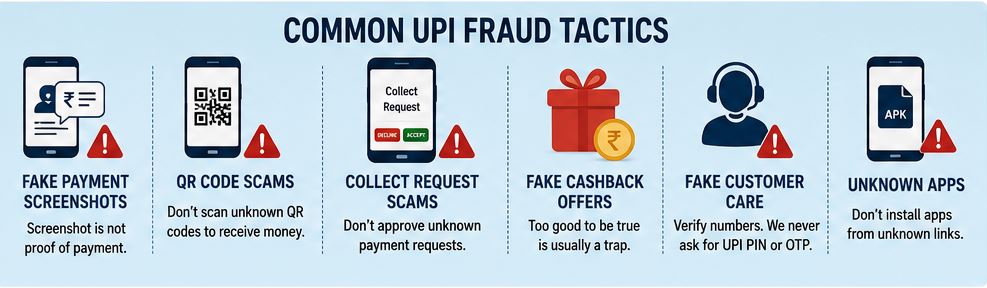
The Most Common UPI Fraud Methods
Aslireview_UPI_Payment_Fraud
1. Fake QR Code Scam
A scammer sends or displays a QR code and tells you that scanning it will help you receive money. This is one of the most important misconceptions to understand.
Scanning a QR code can initiate a payment. If the transaction asks you to enter your UPI PIN, you are authorizing a payment—not simply collecting money.
NPCI's fraud-awareness guidance specifically warns that scanning a QR code and entering a UPI PIN is meant for making payments, not receiving them.
What happened?
Imagine you are selling an old phone online. A supposed buyer agrees to purchase it and says "I'll send you a small verification payment first." Instead of sending money, the buyer sends a QR code. You scan it. Your UPI app opens. You see a payment screen. You enter your PIN. The money goes out of your account.
⚠️ Warning Signs to Watch For
Someone asks you to scan a QR code to receive money
You are told to enter your UPI PIN to receive a payment
The person refuses to use a normal transfer method
You are pressured to complete the transaction immediately
What to Do Instead
Before approving anything, read the payment screen carefully. Ask: "Am I receiving money or paying money?" If the screen shows that money is leaving your account, stop.
💡 AsliReview Tip
Never trust the explanation given by the other person more than the payment screen shown by your own UPI app.
2. Fake Payment Screenshot Scam
A scammer sends you a screenshot claiming that payment has already been completed. The screenshot may show your name, transaction amount, UPI branding, a transaction ID, and a "successful" status. But the money may never have reached your account.
What happened?
A seller agrees to sell a ₹20,000 phone. The buyer sends a screenshot showing "Payment Successful – ₹20,000." The seller hands over the phone. Later, the seller checks the bank account and discovers that no ₹20,000 was received. The screenshot was fake.
⚠️ Warning Signs to Watch For
Buyer insists that the screenshot is proof of payment
Buyer asks you to hand over the product immediately
The transaction does not appear in your banking app
The buyer claims the payment will "show later"
What to Do Instead
Check your actual bank balance, UPI transaction history, and bank SMS or notification. Do not rely on screenshots.
📌 Reality Check
Myth: A payment screenshot is proof that money has reached your account.
Reality: Only your actual account or transaction history should be treated as confirmation.
3. Fake Cashback Scam
You receive a message claiming that you have won cashback, a reward or a special payment benefit. The message contains a link or QR code. You are instructed to complete a transaction to "receive" the cashback.
⚠️ Warning Signs to Watch For
Unexpected cashback offers
Links from unknown numbers
Requests for your UPI PIN
Pressure to claim a reward immediately
Messages that contain suspicious URLs
What to Do Instead
Open your payment app directly rather than clicking an unknown link. If the offer is genuine, verify it through the company's official application or website. NPCI lists fake cashback links among the fraud trends users should remain vigilant about.
4. UPI Collect Request Scam
A scammer sends you a payment request and tries to convince you that approving it will result in money being deposited into your account. But approving the request may authorize a payment from your account.
NPCI's UPI documentation explains that collect requests can require the payer to approve the request and authenticate the transaction with the UPI PIN.
⚠️ Warning Signs to Watch For
Unexpected collect request
Unknown person asking you to approve a request
Request accompanied by a story about receiving money
Caller tells you exactly when to enter your PIN
What to Do Instead
If you weren't expecting the payment request, don't approve it.
5. Fake Customer Care Scam
You search online for a company's customer-care number. A fraudulent number appears in search results, social media posts or online comments. You call it. The person answering pretends to be customer support and asks you to share account information, install an app, share your screen, approve a payment, or provide an OTP.
⚠️ Warning Signs to Watch For
Customer-care number found on an unrelated website
Representative asks for your UPI PIN
You are asked to install remote-access software
You are instructed to transfer money for a refund
What to Do Instead
Go directly to the company's official website or application and obtain its support information there.
💡 AsliReview Tip
When looking for customer support, don't blindly trust the first phone number shown in a search result. Verify the number from the company's official website or official app.
6. Fake Refund Scam
A scammer claims that you are eligible for a refund. Instead of sending the refund, they send a payment request or ask you to complete a transaction.
What happened?
A customer complains about a failed online order. Someone pretending to be customer support calls and says "We have processed your refund. Please approve this request." The customer approves the payment request. Instead of receiving money, the customer sends money to the scammer.
⚠️ Warning Signs to Watch For
Unexpected refund call
Refund requires entering your UPI PIN
Customer-care representative asks you to transfer money
You are asked to install an unknown app
What to Do Instead
Contact the merchant through its official support channel. Never approve a payment merely because someone says it is a refund.
7. UPI Scam Through Online Marketplace
Online marketplaces can create opportunities for both buyers and sellers to become targets.
Common seller scam: a fraudster pretends to buy your product and says they are ready to pay, then sends fake payment screenshots, QR codes, collect requests, or fake "advance payment" links.
Common buyer scam: a fake seller may offer an unusually cheap product, demand full advance payment, move the conversation to WhatsApp, refuse secure marketplace payment methods, and disappear after receiving money.
⚠️ Warning Signs to Watch For
Unrealistically attractive price
Pressure to move outside the platform
Refusal to use protected payment options
QR code sent by a stranger
Fake payment confirmation
8. UPI Fraud Through Unknown Apps
Some scammers convince victims to download applications that they claim are required for refund processing, KYC verification, customer support, payment verification, or remote assistance. Installing an unknown application can expose you to serious security risks.
NPCI's fraud-awareness guidance specifically lists downloading unknown apps among the behaviors users should be cautious about.
What to Do Instead
Only install applications from trusted sources and verify the application developer before installation. If someone unexpectedly asks you to install an application to receive money, stop and verify the request independently.
What Is a UPI PIN and Why Is It Important?
Your UPI PIN is used to authenticate UPI transactions. NPCI states that users should not share their UPI PIN, and that bank customer support will not ask for it.
Treat your UPI PIN like your ATM PIN or banking password. Do not share it with friends, sellers, buyers, customer support, delivery agents, bank callers, or government representatives.
Nobody should need your UPI PIN to "send" money to you.
❌ Common Mistakes That Can Lead to UPI Fraud
Trusting a screenshot — screenshots can be manipulated; always verify the actual transaction
Acting under pressure — a legitimate transaction usually doesn't require you to panic
Sharing your UPI PIN — your PIN is private
Approving unknown requests — never approve a payment request simply because someone tells you it will help you receive money
Searching for customer care without verification — fraudsters can exploit users who call unverified numbers
Installing unknown apps — don't install applications simply because a stranger tells you that you need them
🔍 How to Verify a UPI Payment
Before completing a transaction, check:
Recipient name — confirm it matches the person or business you intend to pay
Amount — check the exact figure
Purpose — ask yourself why you're making this payment
Payment direction — are you sending money or receiving money?
Authorization — if the transaction requires your UPI PIN, understand exactly what you are authorizing
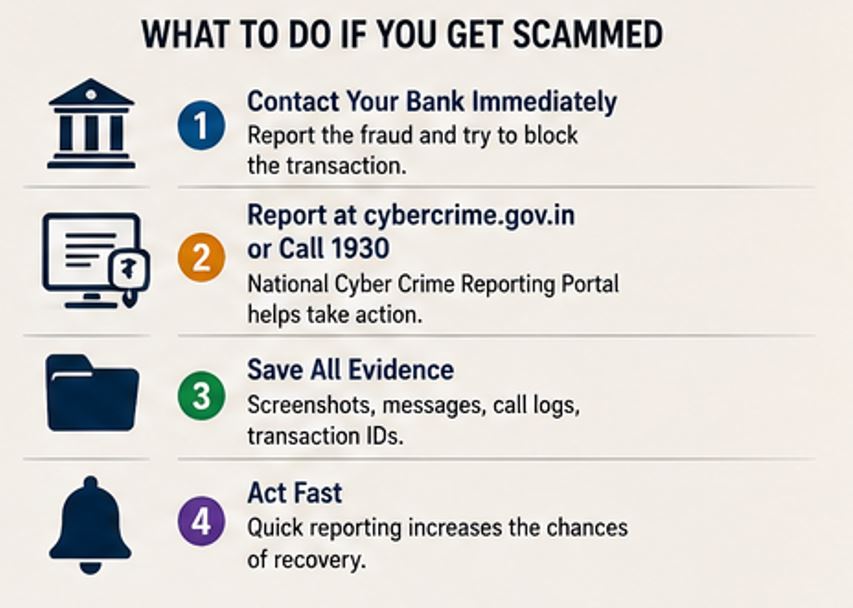
What Should You Do If You Have Been Scammed?
Aslireview_ifScammed
Act quickly.
Step 1: Contact Your Bank Immediately
Tell your bank that you have experienced an unauthorized or fraudulent transaction. RBI advises customers to notify their bank at the earliest because delaying the report can increase the risk of loss. Banks are also required to provide channels for reporting unauthorized electronic transactions.
Step 2: Report Financial Cyber Fraud
For immediate reporting of financial cyber fraud, the Government's National Cyber Crime Reporting Portal directs victims to call 1930. Complaints can also be made through the National Cyber Crime Reporting Portal.
Step 3: Preserve Evidence
Keep the transaction ID, UPI ID, screenshots, phone numbers, WhatsApp messages, SMS messages, emails, payment links, bank notifications, and any other communication. Don't delete evidence simply because you are embarrassed or angry.
Step 4: Secure Your Accounts
Depending on what happened, you may need to change passwords, block cards, contact your bank, review recent transactions, remove suspicious applications, and secure your email account.
Can You Get Your Money Back?
There is no guarantee that stolen money will be recovered. However, reporting quickly can improve the chances of intervention.
RBI's customer-protection framework distinguishes between different types of unauthorized electronic transactions and places importance on how quickly the customer reports the transaction. In certain third-party breach situations, reporting within three working days can result in zero customer liability, subject to applicable conditions.
This does not mean every UPI scam automatically qualifies for a refund. The circumstances of the transaction matter.
💡 AsliReview Tip
Don't wait until tomorrow morning. If money has been transferred fraudulently, report it immediately.
📌 Reality Check
Myth: UPI is unsafe, so I should stop using it.
Reality: UPI is a regulated digital payment system with security and authentication mechanisms. Many scams exploit human decisions and social engineering, rather than directly breaking UPI's underlying system. The goal isn't to fear digital payments — the goal is to understand what you are approving.
UPI Fraud: The 10-Second Safety Rule
Before pressing the final payment button, stop for ten seconds. Ask yourself: who am I paying? Why am I paying? How much am I paying? Did I initiate this transaction? Does the request make sense?
If anything feels wrong, cancel the transaction. Ten seconds of hesitation can save you from a major financial loss.
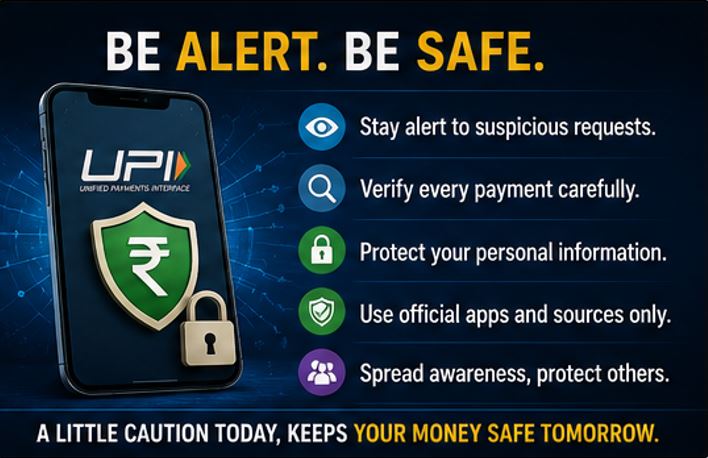
🛡 Quick UPI Safety Checklist
Never share your UPI PIN
Never share OTPs with strangers
Don't scan unknown QR codes to "receive" money
Don't approve unexpected collect requests
Don't trust payment screenshots
Verify the recipient before paying
Don't install unknown applications
Use official customer-support channels
Don't make payments under pressure
Check your bank account after important transactions
Report fraudulent transactions immediately
Frequently Asked Questions
Can someone take money from my account just by knowing my UPI ID?
Knowing your UPI ID alone does not authorize a UPI payment. A transaction normally requires the appropriate authorization and authentication. However, scammers may use your UPI ID as part of a social-engineering attempt to trick you into approving a transaction.
Can I receive money through a QR code?
A QR code can be used for legitimate UPI payments, but you should understand the transaction shown on your screen. If you are asked to scan a QR code and then enter your UPI PIN, you may be authorizing a payment. NPCI specifically warns users about this misconception.
Does a UPI PIN need to be shared to receive money?
No. Your UPI PIN is a confidential authentication credential and should never be shared with another person. NPCI states that bank customer support will not ask for your UPI PIN.
What should I do if I accidentally approved a scam payment?
Contact your bank immediately and report the transaction. For financial cyber fraud, call 1930 and submit the complaint through the National Cyber Crime Reporting Portal. Preserve all transaction and communication evidence.
Is a payment screenshot proof that someone paid me?
No. A screenshot can be manipulated. Verify the payment through your actual bank account or UPI transaction history.
Can a scammer reverse a UPI payment?
A scammer cannot simply make a payment disappear because they claim it was reversed. If you are told that a payment has been reversed or refunded, verify the actual transaction status through your bank or UPI application.
Is UPI itself a scam?
No. UPI is an instant payment system developed by NPCI, an RBI-regulated entity. Fraudsters misuse legitimate payment infrastructure by deceiving users into authorizing transactions or revealing sensitive information.
How can I report UPI fraud in India?
For financial cyber fraud, call 1930 as soon as possible and report the incident through the National Cyber Crime Reporting Portal. You should also notify your bank immediately.
Final Word
UPI has made everyday payments faster and easier for millions of Indians. But convenience should never mean switching off your judgment.
Most UPI scams begin with a simple request: scan this code, approve this request, share this OTP, install this app, pay this small amount.
The safest response is simple: stop, read, verify, then decide.
If you did not initiate the transaction or you don't understand what you are authorizing, don't approve it. And if you have already lost money, don't waste time blaming yourself. Contact your bank immediately, call 1930, preserve your evidence and report the fraud.
The faster you act, the more options may remain available to you.
Aslireview_Alert
Been cheated by a vendor?
Report it on AsliReview and help protect others from the same fraud.