By AsliReview Team · 28 September 2026
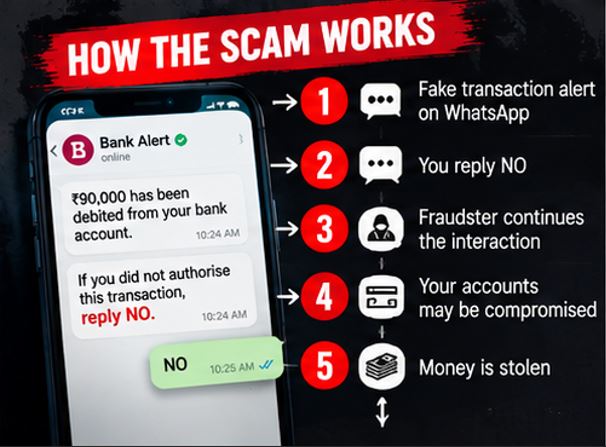
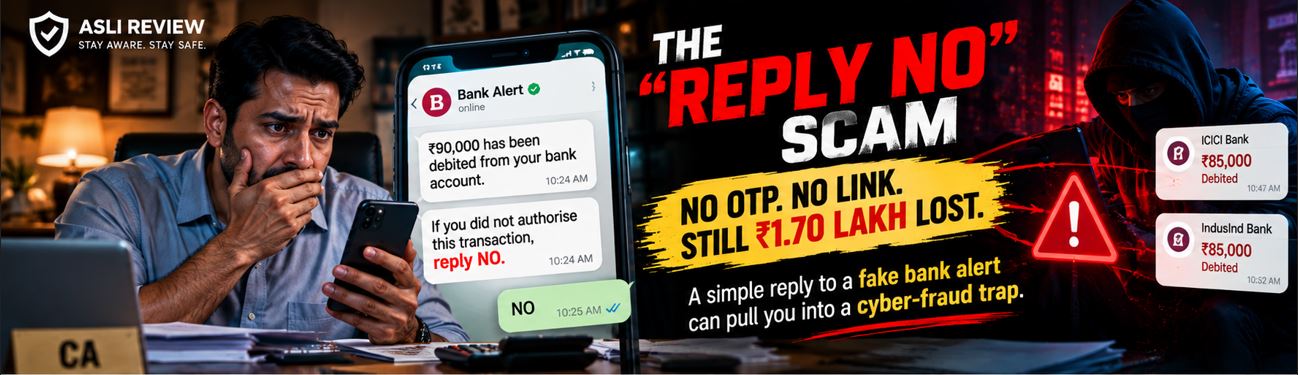
You receive a WhatsApp message: "₹90,000 has been debited from your bank account." Your heart skips a beat. Then a follow-up: "If this transaction was not done by you, reply NO immediately."
No link. No OTP request. No app to install. Just two letters: NO.
It sounds harmless — almost responsible, like the bank is protecting you. That instinct is exactly what this scam is built to exploit.
According to reports (Hindustan Times and other outlets), a Chartered Accountant in Lucknow received a WhatsApp message claiming ₹90,000 had been debited from his account, with instructions to reply "NO" if he hadn't authorized it. Believing he was stopping a fraudulent transaction, he replied as instructed.
He reportedly went on to lose ₹1.70 lakh across his ICICI Bank and IndusInd Bank accounts. No OTP was shared, and no link was clicked, according to the reports. The matter was reportedly under investigation, with Additional DCP Kiran Yadav cited in coverage of the case.
AsliReview Editorial Note: The exact technical mechanism by which replying "NO" alone could lead to unauthorized transactions has not been independently verified by us, and remains part of the ongoing investigation as reported. We're presenting this case as reported by credible news outlets, with the appropriate caveats — not as a confirmed, fully explained technical exploit. Treat the specific how as unconfirmed; treat the pattern (a fake alert engineered to provoke a reply) as the real and recurring danger.
Traditional fraud awareness has trained people to fear
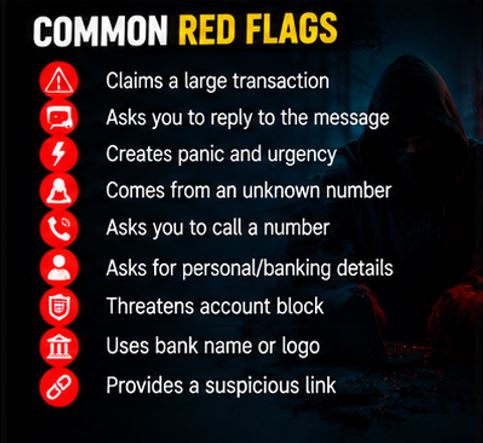
The scam works precisely *because* it doesn't ask for the things you've been told to protect.
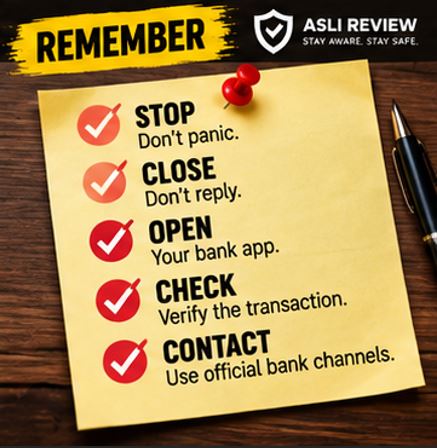
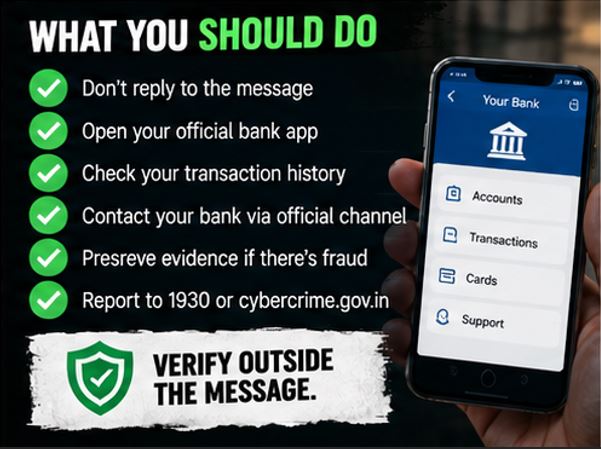
1. Never reply to unsolicited bank alerts on WhatsApp. Banks in India do not send fraud alerts asking you to "reply NO" over WhatsApp. Official bank communication comes via registered SMS shortcodes or the bank's own app.
2. Don't engage with the message at all. Don't reply "NO," don't reply "YES," don't ask "who is this." Any reply confirms your number is active and monitored.
3. Verify independently. Open your bank's app directly, or call the number printed on your bank card or statement — never a number from the message itself — to check your actual account activity.
4. Block and report. Block the number on WhatsApp and report it. You can also report to the National Cyber Crime Reporting Portal.
5. If you've already replied or interacted, act immediately. Call your bank's fraud helpline to freeze your account/cards, and file a complaint on cybercrime.gov.in or call 1930 (National Cyber Crime Helpline) as soon as possible — faster reporting significantly improves the chance of a transaction being reversed or blocked.
This case fits a broader trend: fraud tactics evolving faster than public awareness campaigns. Every time a specific red flag (like "never share your OTP") becomes common knowledge, scammers redesign the approach to route around it.
The underlying defense doesn't change, even as tactics do: treat any unexpected message about your money as unverified until you confirm it yourself, through a channel you initiated.
Is it true that just replying "NO" to a WhatsApp message can lead to fraud? Reports describe a case where a person replied "NO" to a fake bank-debit WhatsApp alert and subsequently lost money. The precise technical link between the reply and the loss has not been independently confirmed publicly, and is reportedly still under investigation. What is well established is that engaging with any unsolicited "bank alert" message — in any way — is risky.
What should I do if I get a message like this?
Don't reply. Don't click anything. Independently verify through your bank's official app or a number you already trust (like the one on your card), not any number or link in the message itself.
Where do I report this kind of scam in India? File a complaint at cybercrime.gov.in or call the National Cyber Crime Helpline at 1930 as soon as possible.
Do banks ever ask customers to reply to WhatsApp messages about transactions? Legitimate Indian banks generally do not ask customers to reply "YES/NO" to WhatsApp messages to confirm or dispute a transaction. Treat any message asking for a reply like this as suspicious by default.
---
*Sources: Reports based on Hindustan Times and other Indian news coverage of the Lucknow case. Some details, including the precise technical mechanism, remain unverified pending investigation.*
AsliReview Tip: Before you react to any "urgent" bank message, pause. Verify through a channel *you* control — your bank's app, or a number from your card — never through the message itself.
Report it on AsliReview and help protect others from the same fraud.
🚨 Report a Fraud →