The Distraction Scam in India: How Shopkeepers Can Lose Cash and Goods in Seconds
By AsliReview Team · 14 September 2026
Not every scam needs a phone, fake website or OTP. Sometimes, the scammer simply needs to keep you busy.
In a distraction scam, two or more people may enter a shop and deliberately create multiple conversations or transactions at the same time. One person may return an item, ask for a refund, change the quantity, ask for a different product, claim that they already paid, or demand change — while another person keeps the shopkeeper occupied with a second transaction.
The objective is to create enough mental confusion that the shopkeeper stops tracking exactly who paid what, what was refunded, what was purchased, and how much change is actually due. That's when the money disappears.
🚨 Fraud Snapshot
Scam Type
Distraction + Fake Payment/Change Scam
Main Targets
Shopkeepers, cashiers and small retailers
Main Weapon
Confusion and distraction
Technology Required
None
Typical Setup
Two or more people working together
Common Tactics
Refunds, simultaneous purchases, fake payment claims and change demands
A shopkeeper who sells spices recently faced exactly this type of fraud. The incident started like a completely normal sale.
AsliReview_DistractionScam_Initial
Several people came into the shop and purchased mustard oil and other spices. The total bill was around ₹4,000. They paid the shopkeeper and took the goods. Nothing seemed unusual. Then the trap began.
Step 1: One Customer Suddenly Complained
AsliReview_DistractionScam_ReturnRequest
One person from the group returned and said the mustard oil was not good quality. He wanted to return the items. The shopkeeper agreed and refunded the customer's ₹4,000. At this point, the shopkeeper believed the first transaction was finished. But it wasn't.
Step 2: Another Customer Created a Second Transaction
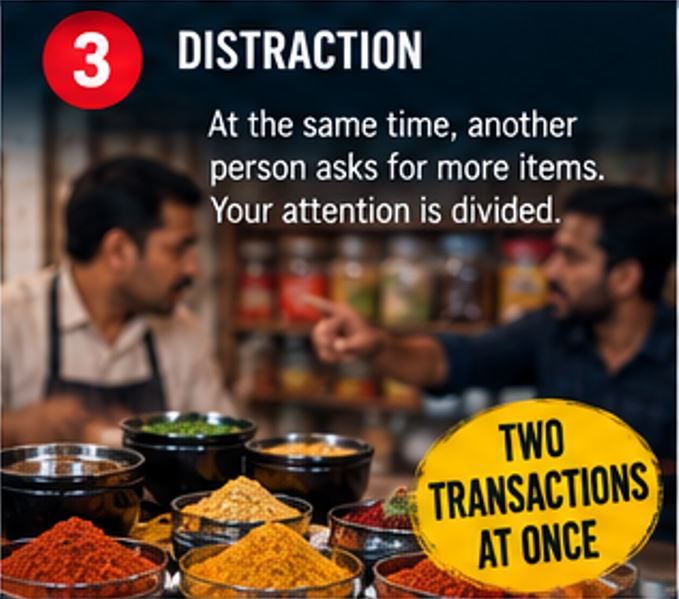
AsliReview_DistractionScam_Distraction
At almost the same time, another person from the group started asking for spices. The shopkeeper's attention shifted to the new customer, and he began handling the second purchase. This was the critical moment — two transactions were now happening simultaneously. One had supposedly been cancelled and refunded. The second was being processed.
Step 3: The First Person Changed His Story
AsliReview_DistractionScam_FakeClaim
The first customer suddenly said something like "I'll take the items after all. I already paid you. Just give me my change." The shopkeeper was already mentally occupied with the second customer. He remembered that the first customer had paid ₹4,000 earlier — but he forgot one critical detail: he had already returned the entire ₹4,000. The scammer exploited that confusion.
Step 4: The Shopkeeper Gave Away the Money and Goods
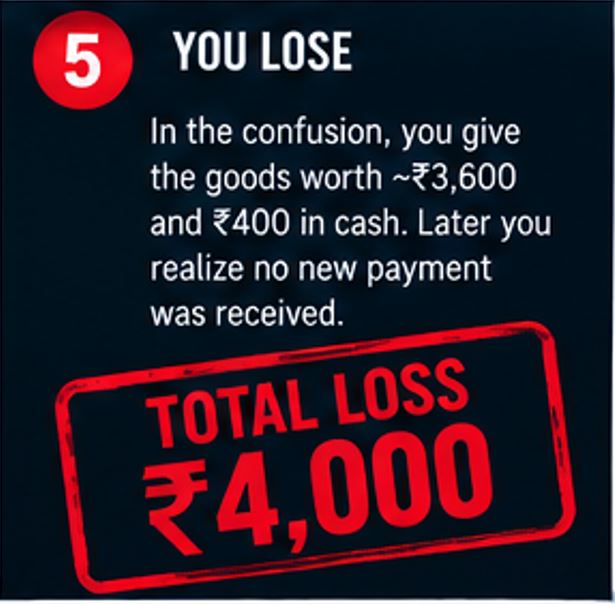
AsliReview_DistractionScam_YouLoose
The shopkeeper accepted the customer's claim. The group ultimately left with goods worth approximately ₹3,600 and ₹400 in cash — a total loss of ₹4,000.
But the real damage wasn't the amount. It was how quickly the scam happened. There was no hacking, no OTP, no fake QR code, no malicious application, no complicated technology. Just distraction. By the time the shopkeeper realised he had already refunded the original ₹4,000, the group had disappeared.
Why Did This Work?
The scam depended on something every busy shopkeeper experiences: cognitive overload. The shopkeeper was simultaneously handling a refund, serving another customer, remembering the previous payment, calculating the new transaction, and listening to conflicting claims.
The scammers deliberately increased the number of things he had to process at once. Eventually, memory replaced verification — and that's where they won.
The Scam's Simple Formula
The entire trick can be reduced to: multiple people + multiple transactions + distraction + false payment claim = loss. The scammers don't necessarily need to overpower the shopkeeper — they make the shopkeeper make the mistake for them.
Why Groups Are Used
A single person attempting this trick may be easier to identify. A group creates something different — while one person talks about a refund, a second asks for products, and a third may ask questions or increase the pressure. The shopkeeper's attention keeps moving, making it harder to maintain a clear mental record of the transaction.
Warning Signs to Watch For
Be particularly careful when several customers:
Start multiple transactions simultaneously
Suddenly change their purchase decision
Ask for a refund and then reverse the decision
Claim they already paid
Ask for change before payment is verified
Pressure you to calculate quickly
Keep interrupting you
Ask you to serve multiple people simultaneously
Create arguments about how much was paid
Say "You already took my money"
Become impatient when you try to verify the transaction
One of these isn't necessarily a scam. But several happening together should make you slow down.
The Most Important Rule for Shopkeepers
Never trust memory for a payment. If someone says "I already paid," don't try to remember — check. If someone says "You returned my money, but I'll take the goods again," stop and check. If someone says "Just give me ₹400 change," stop and check. Your cash counter should answer the question, not your memory.
What to Do Instead
1. Complete One Transaction Before Starting Another
If you're processing a refund, finish it first — count the money, return the goods, confirm the transaction is closed. Only then start serving the next customer.
2. Keep Refunded Money Separate
A simple shop procedure can make a huge difference: count → hand over → confirm → close transaction. Don't leave the transaction mentally "open."
3. Never Give Change Before Confirming Payment
This is particularly important for cash transactions. If someone says "I already paid ₹2,000," don't give change because the person sounds confident. Ask "When did you pay?" then check your cash, your bill, your POS system, your payment notification, and your CCTV if necessary.
4. For Digital Payments, Check Your Own Account
Don't accept customer screenshots, SMS screenshots, "payment successful" screens, or verbal confirmation as proof by themselves. Check your own bank/payment app — the money must actually appear in your account.
5. Don't Let Customers Rush You
This is one of the scammer's biggest advantages — they want you to think "there are other customers waiting, I need to finish this quickly." Don't. A 20-second verification is cheaper than a ₹4,000 mistake.
💡 AsliReview Tip
One customer. One transaction. One confirmation. If a customer suddenly changes the transaction: stop, recount, confirm, continue. Never continue based on what you think happened — confirm what actually happened.
The "Refund Reversal" Trap
One particularly dangerous version of this scam is when a customer buys products, claims the product is defective, requests a refund, receives it, then suddenly decides to keep the products, claims the original payment still exists, and demands change or additional cash.
The shopkeeper remembers "he paid me ₹4,000" but forgets "I already gave him ₹4,000 back." That tiny memory gap is enough to create a loss.
Reality Check
"But I clearly remember the customer paying." That's not enough. The question isn't "did they pay?" — it's "did they pay, and was that payment later refunded?" A transaction can contain multiple money movements. That's why every refund should be treated as a complete closure of the original transaction.
Common Mistakes
Trying to remember every transaction — busy shops are exactly where memory fails
Serving multiple people while handling a refund — this creates unnecessary confusion
Giving change because someone claims they paid — a claim isn't proof
Accepting "I already paid" without checking — verify the payment
Returning the goods before completing the refund process — keep the transaction controlled
Feeling embarrassed about taking time — a genuine customer can wait a few seconds
Assuming a group of customers is automatically trustworthy — scammers can work together
A Simple Shop Counter Safety System
Small retailers don't need expensive technology to reduce this risk. Five simple rules:
No simultaneous refunds and new transactions
No change without verified payment
Every refund must be recorded immediately
If a customer changes their decision, restart the transaction
When confused, stop and recount
The AsliReview 10-Second Rule
If a customer suddenly says "you already took my money," don't argue, don't guess, don't rush. Just say: "One moment, let me check the transaction." Then stop everything — check the payment, check the bill, check the refund, count the cash. Only then continue.
What If You Realise the Scam Too Late?
If the group has already left, immediately check CCTV footage, preserve the transaction/bill details, note the approximate time, write down descriptions of the people, record the vehicle number if available, ask nearby shops whether they saw the group, inform nearby shopkeepers, and report the incident to the local police if appropriate.
Don't rely on memory after several hours — write down everything you remember as soon as possible.
Why CCTV Matters
For small shops, CCTV isn't just about preventing theft. It can help establish who entered the shop, how many people were involved, who handled which transaction, what was returned, when the refund happened, what the suspects looked like, and whether they arrived in a vehicle. A camera doesn't prevent every scam, but it can turn "I think this is what happened" into "this is what happened."
A Countertop Reminder Worth Printing
Shopkeepers can keep a small note near the cash counter: "Payment checked? Refund completed? Change due? Then hand over goods." It may look simple — that's the point. When someone is deliberately trying to confuse you, simple procedures beat memory.
The Bigger Lesson
This scam is a reminder that fraud doesn't always exploit technology. Sometimes it exploits attention, memory, time pressure, politeness, fear of keeping customers waiting, and the assumption that everyone is acting honestly. Small retailers are particularly vulnerable because one person may be doing everything — billing, packing, payment collection, refunds, and customer service — at the same time.
AsliReview's Golden Rule
AsliReview_DistractionScam_ProtectYourself
When someone creates confusion, slow the transaction down. Scammers want speed — they want you to remember, assume, and act. Instead: stop, check, recount, confirm, act.
Frequently Asked Questions
What is a distraction scam?
A distraction scam is a fraud in which criminals deliberately create confusion or multiple simultaneous activities so that the victim makes a financial mistake.
How does the scam work in a shop?
Scammers may use multiple people to create simultaneous purchases, refunds, payment claims or change requests. The shopkeeper becomes distracted and may accidentally hand over cash or goods without receiving the expected payment.
Can this scam happen without technology?
Yes. This type of fraud can be entirely offline and may involve nothing more than cash, goods and psychological manipulation.
Why do scammers work in groups?
Multiple people can divide the victim's attention and make it harder to track several transactions at once.
What should I do if someone says they already paid?
Don't rely on memory. Check your cash, bill, POS record or actual payment account before giving goods or change.
What if a customer changes their mind after receiving a refund?
Treat it as a new transaction. Do not assume the previous payment still exists.
Should shopkeepers refuse refunds?
No. The solution isn't to refuse genuine customers — it's to use a clear refund and payment process.
The AsliReview Shopkeeper Checklist
Before handing over goods:
Payment actually received
Amount verified
Refund status checked
Change calculated
Customer's transaction clearly closed
No conflicting transaction happening simultaneously
Digital payment verified in your own account
Suspicious pressure ignored
CCTV available where possible
When in doubt: stop, recount, verify.
Final Takeaway
The shopkeeper in this incident didn't lose money because he was careless. He was put into a situation deliberately designed to overwhelm his attention. That's an important distinction — the scammers didn't steal the money from his pocket. They created enough confusion for him to hand it over himself.
And that's what makes distraction scams so dangerous. The best defence isn't trying to become suspicious of every customer — it's building a simple process that works even when someone tries to confuse you.
One customer. One transaction. One confirmation. Stay alert. Stay calm. Verify before you hand over cash or goods.
AsliReview_DistractionScam_Footer
Been cheated by a vendor?
Report it on AsliReview and help protect others from the same fraud.