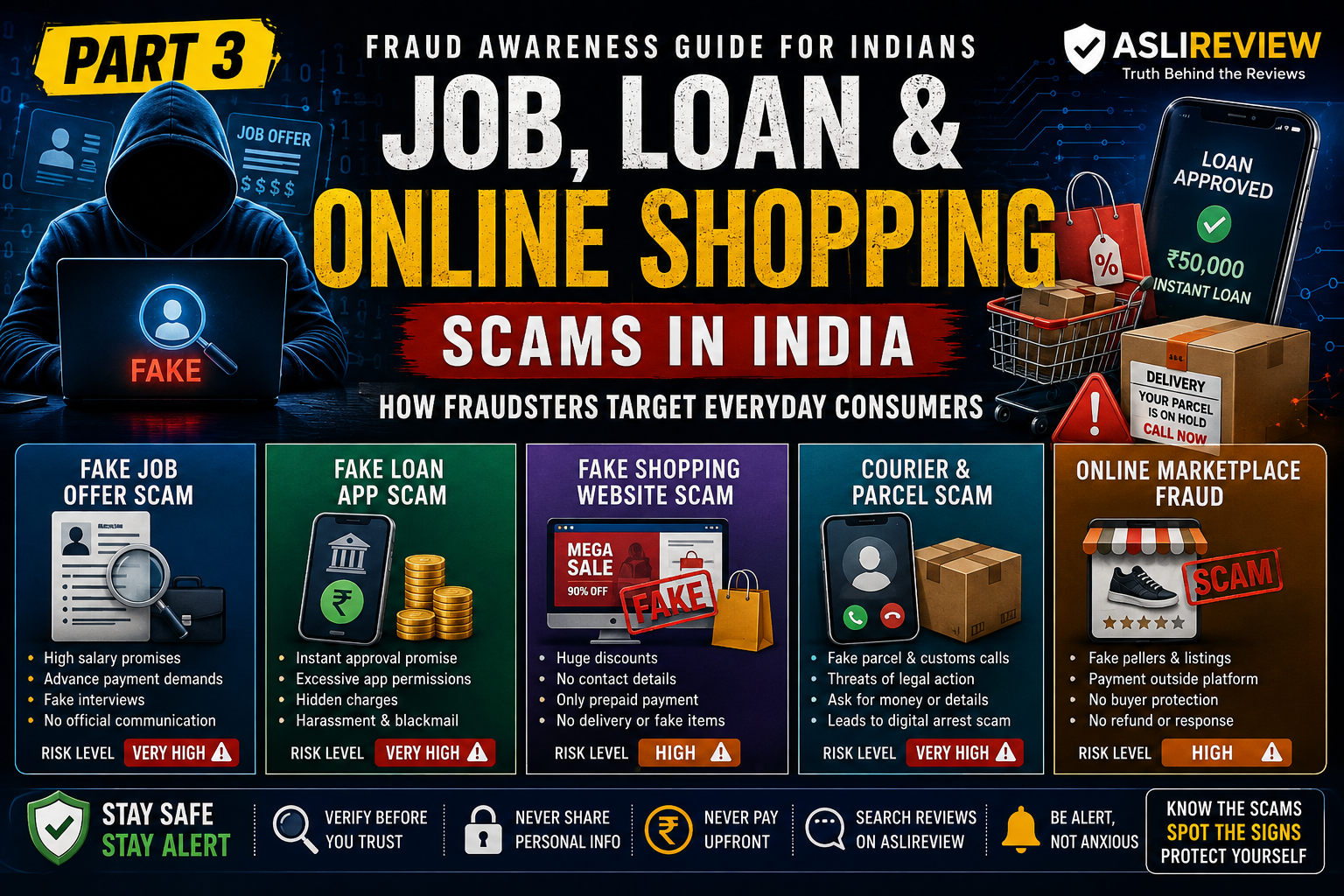
Part 3: Job, Loan & Online Shopping Scams in India – How Fraudsters Target Everyday Consumers
By AsliReview Team · 2 August 2026
Fake Job Offer Scam
🚨 Fraud Snapshot
- Category: Employment Fraud
- Risk Level: 🔴 Very High
- Common Targets: Freshers, Students, Job Seekers
- Average Loss: ₹2,000–₹2,00,000+
- Platform: WhatsApp, Telegram, LinkedIn, Email, Job Portals
- Difficulty to Identify: Medium
- Recovery Chances: Moderate if reported quickly
What is a Fake Job Offer Scam?
A fake job offer scam is a fraud where criminals pretend to represent a company or recruitment agency. They promise attractive salaries, remote jobs, or overseas opportunities, then ask candidates to pay money for registration, training, document verification, visa processing, or equipment.
Legitimate employers pay employees—they don't ask applicants to pay upfront.
How Does This Scam Work?
- You receive a job offer through WhatsApp, email, Telegram, LinkedIn, or a job portal
- The recruiter promises a high salary with minimal qualifications
- You are told you've been "selected" after a very short or fake interview
- The recruiter requests payment for processing, training, security deposits, or background verification
- After payment, communication stops or new charges keep appearing
What Happened?
A recent graduate received a message offering a remote customer support job with a salary of ₹45,000 per month. After a short interview over WhatsApp, the recruiter asked for ₹3,500 as a "document verification fee." Excited by the opportunity, the candidate transferred the money. The recruiter then requested another ₹8,000 for laptop insurance. When the candidate refused, the recruiter blocked all communication.
⚠️ Warning Signs to Watch For
- Guaranteed selection without a proper interview
- Very high salary for simple work
- Requests for registration or processing fees
- Interview conducted only through chat messages
- Gmail or free email addresses instead of official company domains
- Pressure to pay immediately
✅ What to Do Instead
- Research the company independently
- Apply only through official career pages or trusted job portals
- Verify recruiter email addresses and company websites
- Refuse any request for advance payment
- Contact the company directly if you have doubts
❌ Common Mistakes
- Paying "joining fees"
- Trusting offer letters without verification
- Believing recruiters who refuse video or phone interviews
- Sharing Aadhaar, PAN, or bank details too early
🔍 How to Verify
- Check the company's official website
- Search for genuine employee reviews
- Verify the recruiter on LinkedIn
- Search the company name along with the word "scam" or "fraud"
- Look for independent reviews on AsliReview
💡 AsliReview Tip
A genuine employer evaluates your skills—not your willingness to pay fees.
📌 Reality Check
Myth: Paying a small processing fee guarantees the job.
Reality: Legitimate employers do not charge candidates to hire them.
🛡 Quick Checklist
- Did I verify the company's website?
- Is the recruiter using an official email address?
- Was there a proper interview?
- Am I being asked to pay?
- Does the salary seem realistic?
Fake Loan App Scam
🚨 Fraud Snapshot
- Category: Financial Fraud
- Risk Level: 🔴 Very High
- Common Targets: Individuals needing urgent funds
- Average Loss: ₹5,000–₹5,00,000+
- Platform: Mobile Apps, SMS, Social Media
- Difficulty to Identify: Medium
- Recovery Chances: Moderate
What is a Fake Loan App Scam?
Fake loan apps promise instant approvals with little or no paperwork. Once installed, many of these apps request excessive permissions, collect personal data, charge hidden fees, or harass borrowers through threats and blackmail.
How Does This Scam Work?
- The user downloads an unknown loan app
- The app requests access to contacts, photos, and messages
- A small loan is disbursed
- Hidden charges increase the repayment amount
- If payment is delayed, fraudsters threaten to contact friends and relatives or misuse personal information
⚠️ Warning Signs to Watch For
- App not published by a recognised financial institution
- Unrealistically fast approval
- Requests for unnecessary permissions
- Harassment through repeated calls or messages
- No clear loan agreement
✅ What to Do Instead
- Borrow only from regulated lenders
- Read the terms carefully
- Download apps only from official app stores
- Verify the lender before applying
💡 AsliReview Tip
If a lender asks for access to your contacts, gallery, or messages without a clear reason, treat it as a serious warning sign.
Fake Shopping Website Scam
🚨 Fraud Snapshot
- Category: E-commerce Fraud
- Risk Level: 🟠 High
- Common Targets: Online Shoppers
- Average Loss: ₹500–₹50,000+
- Platform: Fake Websites, Social Media Ads
- Difficulty to Identify: Medium
- Recovery Chances: Low to Moderate
What is a Fake Shopping Website?
Fraudsters create websites that closely resemble genuine online stores. They advertise branded products at unusually low prices to attract buyers. After receiving payment, they either deliver counterfeit goods, send nothing at all, or disappear.
⚠️ Warning Signs to Watch For
- Discounts that seem too good to be true
- No company address or contact information
- Only prepaid payment options
- Poor grammar and spelling across the website
- No return or refund policy
- Very recent domain registration
✅ What to Do Instead
- Check customer reviews
- Verify GST details if available
- Look for a secure HTTPS connection
- Search for independent reviews before ordering
- Use payment methods that provide buyer protection whenever possible
📌 Reality Check
Myth: If a website looks professional, it must be genuine.
Reality: Modern website builders make it easy for fraudsters to create convincing fake stores.
Courier & Parcel Scam
🚨 Fraud Snapshot
- Category: Identity & Financial Fraud
- Risk Level: 🔴 Very High
- Common Targets: General Public
- Platform: Phone Calls, SMS, WhatsApp
- Difficulty to Identify: Medium
- Recovery Chances: Moderate
What is a Courier Scam?
Victims receive a call claiming that a parcel addressed to them contains illegal items or has been stopped by customs. The caller then demands payment, personal information, or transfers the call to someone pretending to be a police officer—often leading into a "digital arrest" scam.
⚠️ Warning Signs to Watch For
- Claims about unknown parcels
- Threats of legal action
- Requests to transfer money for verification
- Pressure to stay on the phone
- Instructions not to discuss the call with anyone
✅ What to Do Instead
- End the call calmly
- Contact the courier company using its official website or app
- Do not share personal or banking information
- Report suspicious calls through official cybercrime channels
🛡 Final Safety Checklist
Before trusting any offer, website, recruiter, lender, or caller:
- Verify the organisation independently
- Never pay advance fees for jobs
- Read app permissions carefully
- Avoid unrealistic discounts
- Do not panic if someone threatens legal action over the phone
- Search for reviews before making a payment
- Take a few minutes to verify instead of reacting under pressure
Coming Up in Part 4
The final part of this pillar guide will cover some of the most sophisticated and rapidly evolving frauds in India, including:
- Digital Arrest Scams
- AI Voice Cloning & Deepfake Frauds
- Social Media & Romance Scams
- Fake Investment Communities
- What to Do After Becoming a Victim
- How to Report Cyber Fraud in India
- Government Safety Initiatives
- Comprehensive FAQs
- Final Consumer Safety Checklist
This final section will bring the entire guide together and provide readers with practical steps to respond if they ever encounter a scam.
Report it on AsliReview and help protect others from the same fraud.
🚨 Report a Fraud →